
.png)
As organizations become more complex than ever, business success relies more on end-to-end ownership rather than functional excellence. Despite work being performed by groups within organizations, fragmented ownership creates situations where decisions take too long and are poorly executed, failing to produce desired business results. Speed and agility, and the resulting customer experience, are becoming competitive differentiators.
Deloitte stats show that 81% of top managers admit that work today is done more and more across functional boundaries, whereas 54% claim that cross-functional collaboration occurs frequently or continuously in their companies.
However, many companies still face difficulty with accountability frameworks.
Further research reveals an alarming readiness gap.
According to Deloitte's Global Human Capital Trends report, athough 65% of executives regard cross-functional and team-based operating models as being very important, only 7% are confident that their organizations are capable of managing them effectively. To make matters worse, only 6% of those surveyed say that their organizations are highly effective at managing cross-functional teams.
These are significant consequences.
Research on the implementation of strategy shows that over 70 percent of corporate goals, targets, and success indicators usually have no clear owners.
In the absence of responsibility being established, work gets delayed. Furthermore, a market where the demand for rapidness, adaptability, and meeting the customers' needs is constantly on the rise, a disjointed sense of owning things may be a major drawback in terms of competition.
Organizations that master execution have found a key differentiator: comprehensive ownership. Instead of simply recognizing employees for completing tasks, they encourage cultures where each person and team is responsible for results throughout the entire value chain.
Through Global Woman Leader magazine’s series on leadership in action, we interviewed four South East Asian women executives who share their leadership insights on building end to end ownership. Their insights demonstrate actionable steps towards bridging ownership gaps, enhancing accountability across functions, and turning execution teams into engines driving business growth.
Building Accountability Beyond Functional Boundaries
Ngai Yuen Low, Group Chief Merchandise and Marketing Officer, AEON Group Malaysia
Industry: Retail & Consumer Goods
Country: Malaysia
Leadership Focus: Merchandising Strategy, Marketing Leadership & Business Growth
Core Expertise: Cross-Functional Execution and Customer-Centric Accountability
Ngai Yuen Low drives the organization's merchandising, marketing strategy, and customer engagement. She advocates for accountability systems that can be linked to measurable business outputs as her leadership philosophy.
Identifying Accountability Gaps
"When someone starts with, 'I thought they/someone else was handling it,' I know I already have a problem on hand," says Ngai Yuen. Ownership issues frequently emerge from what might seem like ordinary practices that organizations ignore. "I look for projects with too many update meetings but too few decisions, endless CCs in emails and KPIs that stop conveniently at departmental borders."
Such signals, according to her, usually indicate that accountability has been diluted in the team environment. Rather than concentrating on results, the parties start focusing on actions, reports, and processes. "If success has many owners but failure has none, accountability has evaporated." As for Ngai Yuen, she claims that one of the quickest ways to identify accountability problems is to define the owners of the desired result.
"Be clear on whom the owner is versus who else needs to be responsible and the depth of each accountability." She believes that this understanding makes people more accountable.
Focusing on Business Outcomes
Ngai Yuen strongly believes in moving organizations away from task-driven metrics. "I stop asking, 'Did you finish the task?' and start asking, 'Did it move the needle?'" she says. Rather than paying attention to task completion, she believes that it should be examined if the efforts resulted in business success.
"Did we lift revenue? Are churns spotted and reduced? Did adoption increase? Did complaints drop? Did it delight customers?" Those are some of the questions that she feels need to be asked during performance meetings. When the teams start thinking about results rather than outputs, accountability takes on a whole new meaning.
She also recommends giving ownership to an accountable person for each important goal, stating that "Every major outcome needs one single accountable owner." With support from scorecards, decision deadlines, and key performance indicators, such practices help prevent people from blaming others and become accountable.
As she says, "Teams shouldn't get gold medals for sending emails or closing tickets; they should win only when the customer or business outcome actually improves." In conclusion, her philosophy could be encapsulated in the following quote: "Activity is busy. Ownership is measurable."
Embedding Customer-Centric Accountability Across the Organization
Lolitta Suffian, Senior Vice President, Bank Simpanan Nasional
Industry: Banking & Financial Services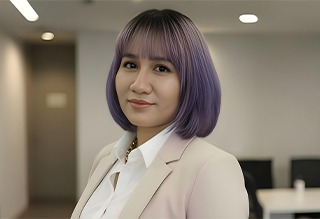
Country: Malaysia
Leadership Focus: Customer Experience Transformation & Service Excellence
Core Expertise: Performance Management and Outcome-Based Accountability
Lolitta is the driving force behind several customer experience initiatives, culture transformation of service, and organizational accountability implementation.
Bridging the Gap Between Strategy and Execution
"Ownership gaps usually hide in the quiet spaces between teams, particularly in the deep disconnect between head-office strategy and frontline execution," says Lolitta. This, according to her, is an area where accountability tends to be lacking due to separation between strategies and operations.
"You notice it when a major initiative slows down because corporate teams view customer experience as someone else's job." In such environments, responsibilities become fragmented and ownership is gradually diluted.
According to Lolitta, companies need to re-examine how they execute their business strategies. As she puts it, "We have to stop looking at organizational goals as a relay race where we just drop policies down to the frontline and walk away." Rather, accountability should be institutionalized.
In this regard, BSN has embedded Service Culture Initiative directly into its Performance Management System. "We tackled this head-on by institutionalizing our Service Culture Initiatives directly into our 2026 Performance Management System." There is a direct connection between the contribution of each individual to customer experience, and it is included in their performance review.
Creating Customer-Focused Accountability
Accountability will hold meaning for Lolitta if workers realize the effect that their work can have on humanity. "Shifting a team from a task mindset to an outcome mindset requires a fundamental change in how we define and celebrate success."
For her, leaders need to stop focusing on the reward of tasks completed and pay attention to how these actions benefit the customer. "I always anchor our conversations around the human impact of our work, constantly asking how a specific action changes the experience for the person on the other end."
One incident worth mentioning in this regard was that related to the onboarding team of BSN’s branch. While in the past, their job used to end at the point of handing over the debit card to the customer, their job now extends beyond the process.
"They didn't do it because it was a rigid compliance checklist; they did it because they genuinely cared about empowering the customer before they walked out the door." The result was impressive, as there were around 38,000 fewer contact center calls.
Leadership immersion programs are also lauded by Lolitta as contributing to accountability. "Execution stops being a cold, theoretical mandate. It builds immediate empathy and a shared map of reality across functions." Ownership comes automatically once employees and their leaders see the repercussions of their work.
Aligning Teams Around Value Creation and Strategic Impact
Ong Jee Lian, Group Chief Sustainability & Communications Officer, GAMUDA
Industry: Infrastructure, Construction & Property Development
Country: Malaysia
Leadership Focus: Sustainability, Corporate Communications & Stakeholder Management
Core Expertise: Cross-Functional Alignment and Strategic Execution
Ong Jee Lian is responsible for driving sustainability, communications and stakeholder engagement initiatives of the company. Collaboration with different teams is the key part of her job, which means being accountable and aligned are paramount to getting work done successfully.
Defining Roles and Responsibilities Clearly
"I find using the RACI model highly useful as a starting point, especially for cross-functional execution between internal teams or external stakeholders," states Ong. It is important to be accountable first through clarity.
The process of being clear on who is responsible, accountable, consulted, or informed will eliminate confusion while making sure that everyone knows where he/she fits into the larger execution context.
Additionally, Ong recognizes that it is important to assist teams in understanding what implications the decisions will entail. "Clear ownership of outcomes becomes tangible when there is a strong focus on the value of a task, rather than just its completion."
In order to ensure accountability, Ong makes sure that all team members recognize the cost implications as well as project timelines at the beginning of the process. "Making sure everyone involved is fully aware of the cost and timeline impacts of their work at the start keeps the team aligned and on track." When individuals understand the broader consequences of their actions, ownership becomes more meaningful.
Shifting from Tasks to Value Creation
Ong believes that there are many different ways to make individuals owners. "I start by clearly demonstrating what's in it for them."
The moment individuals see how their efforts will help the company grow, at the same time contributing towards their personal growth, then there comes a natural change in their mindset. "It naturally shifts their mindset from checking a box to solving a problem."
She also believes in the benefits of outcomes-based performance metrics. "We stop measuring how many hours were worked and start measuring what value was delivered." This is achieved through methods like the Objectives and Key Results (OKRs) process, whereby the teams concentrate on results and not on work effort.
Empowerment is also critical. "I give the team ownership over how they achieve the goal." By setting the destination and giving the teams the freedom to find the right way of getting there, she has managed to create an empowering atmosphere.
Transforming Execution Through Shared Accountability
Katrina Galeos, Director of Sales, Easy Outsource
Industry: Business Process Outsourcing (BPO) & Staffing Solutions
Country: Philippines
Leadership Focus: Sales Leadership, Client Success & Operational Alignment
Core Expertise: Cross-Functional Collaboration and Outcome-Driven Execution
Katrina Galeos leads overall sales expansion, maintaining client relations, and ensuring smooth communication among the recruitment, operations, and delivery departments. Working in outsourcing settings has allowed her to understand the significance of having complete ownership throughout the process.
Improving Ownership Across Team Handoffs
"Usually, it becomes obvious when things are getting done, but the actual outcome isn't improving," explains Katrina. She commonly observes issues related to accountability arise when there is a shift from recruiting to operations and sales.
"Everyone assumes someone else owns the next step." Problems then start to develop, especially with customer onboarding and delivery of services.
In order to overcome these problems, Katrina makes sure to clarify the issue of ownership right at the outset. "One thing that helps is making ownership very clear from the start—not just who handles the task, but who is accountable for the final result."
In addition, she believes that regular check-ins should revolve around the results achieved, and not the activity undertaken.
Linking Individual Efforts to Business Results
The solution for Katrina in gaining employee buy-in for the results lies in showing how individual efforts can lead to accomplishing the overall organizational objective.
"I try to connect everyone's work back to the bigger business goal or client impact." As opposed to measuring success through task accomplishment, Katrina focuses more on outcomes like client satisfaction, placement, response rate, and revenue generation.
"Instead of measuring only completed tasks, we focus more on results." By doing this, employees will be encouraged to look beyond themselves and think about the bigger picture.
According to Katrina, "That mindset shift helps teams think beyond 'I finished my part' and focus more on overall success." Once people accept this new way of thinking, everyone can be held accountable, and execution is highly effective.
Last Word: Turning Accountability into a Competitive Advantage
It is possible that industries, organizational structures, and leadership styles vary, yet the points shared by these women leaders strike a very common chord i.e., ownership clarity is a huge determinant of successful execution.
The first leader Ngai Yuen Low highlights that accountability needs to be measurable, the second Lolitta Suffian proposes a ownership model customer-centric, the third Ong Jee Lian is very methodical in clarifying roles and empowering people and the last Katrina Galeos strongly believes that tying ones individual contributions to business outcomes is a real source of motivation all these women leaders have got the point that accountability should not only be associated with tasks, but results as well.
As companies continue to deal with more challenging and intertwined environments, having a single person responsible for the entire process from start to finish will become a very important leadership skill. The enterprises that succeed will be the ones that close the spaces where no one is responsible, authorize people to go outside their functional areas when they think, and make sure that every party stays loyal to the result.
Given that our time is largely characterized by working together, having the sense of ownership is no longer merely a managerial rule it is a differentiating factor in the market.
Latest Issues
🍪 Do you like Cookies?
We use cookies to ensure you get the best experience on our website. Read more...
Copyright © All rights reserved. Global Woman Leader Contact Us About