

As a young girl interested in knowing why things broke down and how they could be fixed, Dr. Marian Croak curiously found learning chances in even the most mundane situations. When any technicians came to her house, she observed their work meticulously, highly interested to understand how they fixed things and found solutions. On the other hand, her keen interest in science later on turned out to shape her career in engineering and telecommunications, ultimately changing the way the world communicates.
In today’s digital world, the ease of conducting a video call, participating in a virtual meeting, or using the internet to converse with people located miles apart, has become a convenient daily affair.
But what many do not know is that, the foundation of technology that enables voice and video calls was laid by Dr. Marian Croak, an American engineering genius.
Marian became one of the pioneers who helped form modern channels of communication. Her contribution in the field of Voice over Internet Protocol (VoIP) is pivotal in shifting to internet telephony that laid the groundwork for current communication systems employed by people and organizations around the globe.
Owning over 200 patents with over half of them related to VoIP developments, Marian is a decorated name in the field of telecommunication engineering, network design, web connectivity, and ethical AI. Her journey from being a curious kid to the senior technologist at Google showcases how innovation and creativity have the ability to transform technologies through experimentation.
Whereas her inventions have transformed the way millions of people communicate with each other, Marian’s achievements go far beyond engineering alone. Let’s take a closer look at her journey, accomplishments in engineering and the inventions that have revolutionized communication in modern times.
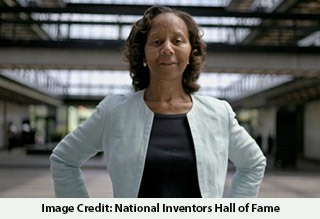 Marian Croak’s Early Life & Education
Marian was born in 1955 in New York City and was fascinated by science and technology from a young age, especially when it came to learning how things worked. This early interest in problem solving demonstrated the inquisitiveness that later made her a pioneer in telecommunications and internet communication.
Her parents encouraged her curiosity, especially her father, who constructed a chemistry set for her to fuel her passion for conducting experiments. In addition, a female chemistry teacher at her public school became an influential source of inspiration, strengthening her interest in science and demonstrating the value of encouragement during a student's formative years.
“You need to be childlike. A little naïve and not inhibited by what’s possible.” Marian shared in an interview.
Later, she joined Princeton University where she obtained her bachelor's degree in 1977. She then went to the University of Southern California (USC) completing her doctoral education in Quantitative Analysis and Social Psychology in 1982.
Latest Issues
🍪 Do you like Cookies?
We use cookies to ensure you get the best experience on our website. Read more...
Copyright © All rights reserved. Global Woman Leader Contact Us About