
.png)
TELECOM
Heightened global uncertainty creates indirect impact on the telecom sector believes Galih Savitri, CEO, Teltonika Indonesia.
Talking about the overall impact she says, “The ongoing conflict between the US/Israel and Iran has indirectly affected our operations through heightened global 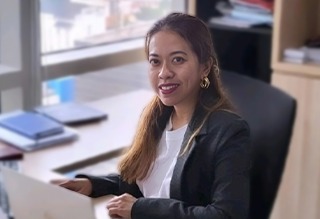 uncertainty. While our core business remains resilient, we have experienced increased costs in logistics and occasional disruptions in global supply chains. Fluctuations in energy prices have also influenced transportation and operational expenses.”
Global turmoil also makes clients conscious and cautious about spending; this sentiment is echoed by various leaders and Galih seconds the thought. She says, “Some clients have become more cautious with capital expenditure, slightly slowing decision making cycles. However, demand for fleet management and tracking solutions remains strong, as companies seek greater efficiency and control during uncertain times, which partially offsets the external pressures.”
For Galih, the focus has been on strengthening operational resilience and maintaining business continuity. The Indonesian leader tells us, “We are improving on inventory planning to buffer against delays. Internally, we are closely monitoring costs and optimizing resource allocation to maintain profitability.”
Client engagement becomes central too. Galih explains, “I have also encouraged stronger engagement with clients, positioning our solutions as tools to improve efficiency and risk management in uncertain environments. Additionally, we continue to align closely with our global headquarters to ensure supply stability and strategic coordination. Overall, our approach is to stay agile, proactive and disciplined in navigating ongoing geopolitical volatility.”
FINANCE
Abigail Marie Casanova, President and CEO, SB Finance from Philippines says that Geopolitical tensions of this scale tend to transmit quickly into the financial  system through volatility, liquidity pressure, and shifts in risk appetite.
Talking about the general sentiment in the finance landscape, she says, “What we are seeing is a more cautious lending environment, tighter capital allocation, and heightened sensitivity to sectors exposed to energy and supply chain disruptions. For financial institutions, the impact is less about immediate losses and more about uncertainty. At the same time, it reinforces the importance of resilient portfolios, diversified exposure, and disciplined risk management. In periods like this, stability is the result of consistent, well-structured financial practices.”
For Abigail, discipline, visibility, and adaptability have been the requisites to overcome the impact of the geopolitical tension. “Our approach is anchored on discipline, visibility, and adaptability. We have strengthened portfolio monitoring to identify early signals of stress, particularly in segments that may be indirectly affected by global disruptions. At the same time, we remain deliberate in capital deployment, ensuring that growth decisions are aligned with our risk appetite,” she says.
Abigail further explains, “Internally, we focus on maintaining operational agility and enabling teams to respond quickly to changing conditions without compromising governance. More broadly, we continue to prioritize solutions that support customers through uncertainty, particularly those managing short-term financial pressures. Our focus is not just on growth, but on sustaining resilience while staying ready to capture opportunities as conditions stabilize.”
Latest Issues

🍪 Do you like Cookies?
We use cookies to ensure you get the best experience on our website. Read more...
Copyright © All rights reserved. Global Woman Leader