
.png)
Leadership, in its most compelling form, is defined by the ability to translate vision into meaningful impact. In the rapidly evolving domain of AI-powered sign language translation services, true leaders are those who combine technological foresight with a deep sense of social responsibility. They operate at the intersection of innovation and inclusion, ensuring that advancements in artificial intelligence are not only cutting edge but also deeply human-centric.
By leveraging AI to bridge communication gaps, these leaders are reshaping accessibility and enabling more inclusive interactions for communities that have long remained underserved.
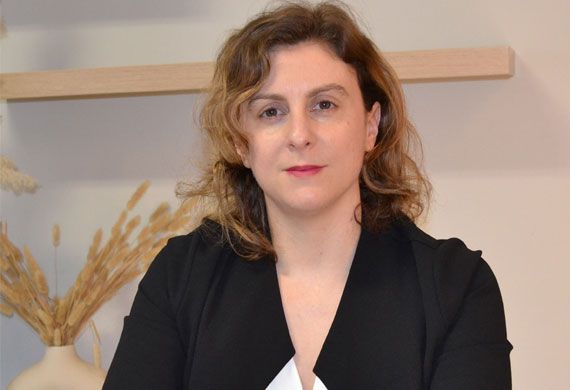
At the forefront of this transformative space stands Marta Sanzari, Head of AI Research and Development at Handy Signs, whose journey reflects a rare blend of academic depth and practical ingenuity. She began her career with a PhD in Artificial Intelligence and Computer Vision, followed by an immediate transition into academia.
What distinguished her early professional years was an enduring appreciation for the dynamic nature of academic environments, where knowledge, culture, and innovation continuously intersect and evolve.
From the outset, she viewed teaching as more than the delivery of content; it was an opportunity to foster a mindset rooted in curiosity and lifelong learning. With a strong foundation in mathematics and AI, she cultivated an approach that balanced intellectual rigor with adaptability. Among her most formative experiences was the ability to translate complex concepts into accessible and engaging ideas.
This clarity in communication, combined with an openness to diverse ways of thinking, became a defining strength, one that continues to shape her leadership and her contributions to advancing AI-driven accessibility solutions on a global scale. Let’s hear from her.
By aligning technical advancement with practical impact, I ensure that our work not only pushes the boundaries of AI but also delivers meaningful and accessible solutions for the communities we aim to serve
What led you to switch from education to the field of AI? How did you build your AI expertise?
In truth, I never really changed directions, as my journey has continuously evolved while remaining rooted in artificial intelligence. AI has been a constant since my early studies, and I have consistently focused on strengthening both its theoretical and practical applications. I built my expertise through a combination of academic research, teaching, and hands-on industry experience.
Academia provided me with a strong theoretical foundation, while teaching helped me refine my understanding and improve how I communicate complex ideas. Later, my experience in corporate and startup environments allowed me to translate theory into real world solutions.
Today, my strength lies in bridging academia and industry, where I combine rigor with pragmatism while continuously updating my skills to stay aligned with the rapid advancements in artificial intelligence and its evolving applications.
Introduce us to Handy Signs. What key responsibilities do you shoulder as the company’s Head of AI R&D?
Handy Signs is dedicated to breaking communication barriers, especially between hearing and deaf individuals, while fostering inclusive interactions across diverse communication needs. Artificial intelligence is central to enabling this vision.
As Head of AI R&D, I am responsible for shaping the company’s technological direction by defining AI strategy, leading research and development, and ensuring our solutions remain innovative and relevant to real world applications. My role also involves strong team leadership, where I emphasize collaboration and shared ownership.
I focus on building an environment where ideas flow openly, challenges are addressed collectively, and innovation is driven through teamwork. By aligning technical advancement with practical impact, I ensure that our work not only pushes the boundaries of AI but also delivers meaningful and accessible solutions for the communities we aim to serve.
In your experience, what are the fundamentals of building a strong AI strategy? How can AI leaders keep companies relevant in today’s fast evolving landscape?
A strong AI strategy begins with continuous learning, ensuring organizations guide technology rather than allowing it to dictate direction. It is essential to align AI initiatives with core business objectives and focus on areas where AI can create the greatest impact.
I believe strategic allocation of resources and talent plays a critical role in driving meaningful outcomes. AI strategy is not merely about adopting new technologies, but about enabling long term growth and transformation.
From a leadership perspective, staying relevant requires foresight and adaptability. I emphasize anticipating emerging trends, encouraging experimentation, and equipping teams with the right skills to convert opportunities into practical solutions.
It is equally important to build a culture that embraces change and innovation. Ultimately, effective AI leadership is about proactively shaping the future, leading change with clarity and purpose rather than simply reacting to it.
What are some of the toughest challenges you encounter in your current role? How do you navigate them?
One of the toughest challenges I face is balancing ambitious goals with the realities of managing a diverse team. People are complex, and aligning everyone toward a shared vision requires both empathy and strategic thinking. I focus on understanding individual strengths and motivations, ensuring each team member feels empowered and supported in their role. Clear communication and adaptability remain essential in navigating these dynamics effectively.
I approach challenges as opportunities, as they push me to grow as a leader while strengthening team cohesion. They also help refine our approach to problem solving and ensure that our work continues to deliver meaningful and impactful outcomes in an evolving environment.
Looking back on your journey, what milestones and achievements are you most proud of? What is your leadership philosophy?
I am most proud of the fact that I have never allowed setbacks to define my journey. Each challenge has served as an opportunity to learn, adapt, and move forward with greater clarity and determination.
Along the way, my team and I have achieved meaningful recognition, including winning a prestigious award at an international AI Festival in Italy. We have also consistently received positive feedback for our mission to enhance communication through technology, which reinforces the impact of our work.
My leadership philosophy is grounded in simplicity and purpose: be kind, stay resilient, and never give up. I strongly believe in leading with empathy, fostering collaboration, and maintaining persistence even in the face of uncertainty.
This balanced approach has not only shaped my personal growth but has also played a vital role in building strong, motivated teams that are aligned with a shared vision and committed to delivering impactful results.
How do you foresee the global AI landscape evolving in the near future? Which trends will define the industry?
I see artificial intelligence becoming increasingly integrated into both everyday life and professional environments, enabling people to work smarter, make informed decisions, and solve problems more efficiently. Its presence will continue to grow in ways that are subtle yet highly transformative.
Key trends will revolve around accessibility, usability, and human centric design, ensuring that AI solutions are intuitive and widely applicable. I also expect AI to be seamlessly embedded into everyday tools, enhancing user experience without being overly intrusive.
Another defining trend will be the convergence of AI with ethics and governance. I believe the most successful organizations will be those that strike a balance between innovation and responsibility, ensuring transparency, building trust, and aligning with broader societal needs. Overall, AI will continue to expand human potential and create meaningful opportunities across industries globally.
Marta Sanzari, Head - AI Research & Development, Handy Signs
A seasoned AI leader with a strong foundation in Artificial Intelligence and Computer Vision, Marta Sanzari serves as Head of AI Research and Development at Handy Signs. She brings expertise across academia and industry, driving innovation in accessible technology while championing inclusive, human centric AI solutions that bridge critical communication gaps globally
QUICK FACTS
Educational Qualification: PhD in Artificial Intelligence and Computer Vision.
Awards & Recognitions: Recipient of recognition at an international AI Festival in Italy; multiple accolades for innovation in AI driven communication solutions.
Success Mantra: Be kind, stay resilient, and never give up.
A Business Leader Who Inspires You: Margherita Hack for her resilience, pioneering contributions, and lasting impact.
ON THE DECK

🍪 Do you like Cookies?
We use cookies to ensure you get the best experience on our website. Read more...
Copyright © All rights reserved. Global Woman Leader Contact Us About