.png)
10. Netherlands, Europe
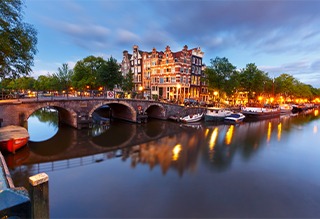 The Netherlands offers an appealing proposition to women founders who want access to a well-connected European market and a strong digital and startup ecosystem.
According to the World Bank, the Netherlands scores 62.5 out of 100 on its entrepreneurship legal framework.
Amsterdam is an established part of Europe’s startup ecosystem and has traditionally been known for its noticeable number of women founders. A Startup Genome study has previously included Amsterdam among the startup ecosystems with a substantial number of women founders.
Strategically located, the Netherlands can offer great value to entrepreneurs who want to reach several European markets from one hub.
Most in-demand industries in the Netherlands: SaaS, fintech, logistics, sustainability, e-commerce, and international services.
Practical advantage for women entrepreneurs in the Netherlands: Founders should treat the Netherlands as a European launchpad and build their market strategy around neighbouring EU markets rather than only the Dutch consumer base.
What Actually Makes a Country Good for Women Entrepreneurs?
No single ranking can identify with certainty the best country in the world for all women founders. One nation could offer excellent gender equality but a limited market size, while another has a large startup ecosystem but limited financing.
The World Bank’s Women, Business and the Law 2026 framework is especially relevant because it considers not just laws but also supportive frameworks and their enforcement. Worldwide, the average score is 67 for legal frameworks, 47 for supportive frameworks, and 53 for enforcement.
The most helpful checklist for female entrepreneurs therefore becomes:
- Access to capital: Can women get loans, guarantees, grants, and VC money?
- Market access: Can women-led firms compete for government and corporate contracts?
- Legal equality: Can women form independent businesses, access financing, and hold ownership?
- Support structures: Are there mentorship programs, incubators, and business development programs?
- Family structures: Are child care and parental policies supportive of entrepreneurship?
- Scalability: Do entrepreneurs have access to a large domestic market and international expansion options?
- Culture of entrepreneurship: Are women encouraged to build growth-oriented firms rather than only necessity-driven ones?
This is further reinforced by GEM’s newest research, which shows that women around the world continue to be less entrepreneurial than men and that family or personal reasons remain among the main factors in business closures.
The Future Outlook for Women Entrepreneurs
What matters is not just which destinations symbolically support women’s entrepreneurship, but the practical mechanisms that have a tangible impact on the economics of starting a company. Canada illustrates the importance of funding and ecosystem programs; the U.S. gives women-owned businesses a specific path into government procurement; the UK is building a more responsible financing system; and France is using credit guarantees to lower one of the most persistent barriers to starting a business.
For founders, however, the right destination will depend on the business. A technology founder looking for venture capital may have more success in the U.S. and UK than elsewhere; a small business founder looking for funding could benefit more from Canada’s ecosystem; a regional business founder may be happier in the UAE; and an impact or technology founder may find the Nordic countries particularly appealing.
In sum, the best destination is not simply where women own businesses, but where they have the resources to set up businesses that survive and grow.
Latest Issues
🍪 Do you like Cookies?
We use cookies to ensure you get the best experience on our website. Read more...
Copyright © All rights reserved. Global Woman Leader Contact Us About