
.png)
Female entrepreneurs are gradually becoming a rising force in Asia’s business environment like never before. 23% of all Asian MSMEs are women-founded, contributing significantly to employment creation and household income generation.
The rising involvement of female founders has become an important factor in driving regional economic growth, according to the Asian Venture Philanthropy Network (AVPN).
The trend is seen through several markets. GEM’s data reveals that the level of women’s engagement in entrepreneurial activity in places like Vietnam and Indonesia is one of the highest in the world, with Thailand regularly ranking among the top performing countries in terms of women entrepreneurs.
Despite the progress, female entrepreneurs in Asia still find themselves facing structural hurdles such as inequality when it comes to networking, access to capital, and management roles. However, these hurdles are not stopping the enterprising ones from creating significant business impact while also contributing to their nation’s economic growth.
Take for instance, Vietnamese entrepreneur Le Hoang Diep Thao, founder of King Coffee. After an extremely publicized breakup of her company, she founded King Coffee in 2016 and took it to more than 120 countries, showing how a purpose-driven approach and perseverance can turn even the biggest challenges into successful opportunities.
The Asian business landscape is teeming with similar success stories of women founders overcoming challenges to build profitable enterprises. Zhang Xin, Zhou Qunfei, Kalpana Saroj, Maria Sucgang and Falguni Nayar are few other names who built companies in real estate, manufacturing, technology services and retail. Beginning in constrained environments, their journeys progressed into structured, large-scale enterprises operating across domestic and international markets.
Taking a closer look at their business journeys, one stands to gain critical business and life lessons.
Read about the inspirational journeys of six outstanding Asian women entrepreneurs who exemplify the value of persistence, lifelong learning, adaptability, and visionary thinking, values that still guide the next generation of business leaders in Asia today.
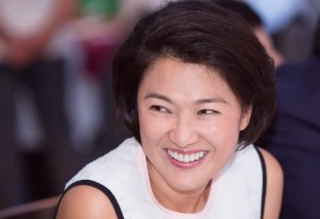
Zhang Xin, Co-founder, SOHO China: From Sweatshop Floors to Real Estate Billionaire
Industry: Real Estate & Commercial Property Development
Nationality: China
Funding / IPO: Raised approximately $1.9 billion through SOHO China’s Hong Kong IPO in 2007
Zhang Xin is among the most powerful businesswomen in China. Her name is linked to the property sector as the co-founder of SOHO China, a major real estate company established in 1995, developing commercial property of 54 million square feet.
Born in Beijing in 1965, she lived in poverty after the Cultural Revolution. At the age of 14 she moved to Hong Kong and worked in small factories for five years.
She went on to study Economics at the University of Sussex and obtained her Master's Degree from the University of Cambridge in 1992; she was later awarded an Honorary Doctorate by Sussex in 2013.
After gaining experience in investment banking at major financial institutions including Goldman Sachs during the early 1990s, she decided to return to China and, together with her husband Pan Shiyi, started Hongshi, now called SOHO China.
As per Forbes, her company turned into one of the largest property developers in China, also being considered as one of the Largest Public Companies globally.
In 2007, the company went public on the Hong Kong stock exchange, raising proceeds of $1.9 billion in the initial public offering, solidifying Zhang Xin's place among Asia's top self-made women entrepreneurs.
Lesson To Learn: Adversity Can Become a Foundation for Visionary Leadership
Zhang Xin's story demonstrates that coming from an underprivileged background does not necessarily restrain one's future achievements. Instead of letting hardship and physical work dictate her destiny, she turned to education and new experiences to create a bigger vision for herself.
Le Hoang Diep Thao, Co-founder, King Coffee: Reinventing Success After Personal Turmoil
 Industry: Coffee / Food & Beverage
Nationality: Vietnamese
Key Achievement: Built King Coffee into a globally recognized Vietnamese coffee brand with a presence in more than 120 countries
A Vietnamese businesswoman, Le Hoang Diep Thao rose from humble beginnings to build Vietnam’s leading coffee brands, overcome a highly publicized business split and divorce, and successfully reinvent herself by founding King Coffee.
Le Hoang Diep Thao is known as the founder of King Coffee, launched in 2016. She and her husband founded Trung Nguyên Group in 1996, turning it into one of the country's most well-known coffee brands. She is admired for her contributions to turning Vietnamese coffee into a global brand and for restarting her entrepreneurial journey after major personal and professional setbacks.
She hit rock bottom after a publicly reported divorce and split of the business in 2015. Le Hoang started from scratch and founded King Coffee, determined to establish a Vietnamese coffee brand that would become a global player.
She turned her personal difficulties into a new business venture and continued expanding into foreign markets. Within a few years, King Coffee products entered several international markets, including Asia and the United States. In July 2017, King Coffee officially returned to Vietnam, opening stores in 64 provinces across the nation.
Lesson To Learn: Reinvention Is One of the Most Powerful Entrepreneurial Skills
One of the biggest takeaways from Le Hoang Diep Thao's story is how setbacks actually can be just the start of the road to success. Business leaders get knocked down. It really is the power to return and change oneself that marks those who are leaders over time versus those who are one-time winners.
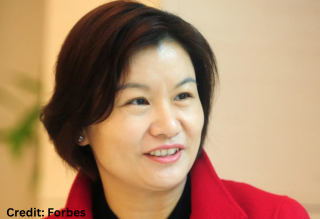
Zhou Qunfei, Founder & CEO, Lens Technology: The Factory Worker Who Built a Tech Empire
 Industry: Technology manufacturing
Nationality: Chinese
Key Achievement: Lens Technology IPO in 2015 valued about $30B USD, among China’s largest listings.
Zhou Qunfei is a Chinese entrepreneur and founder of Lens Technology, a leading supplier of touchscreen glass for Apple and Samsung. Rising from poverty, she became one of the world’s richest self-made women through innovation, hard work, and manufacturing expertise.
Originally from a poor countryside family in China, Zhou who was born in Hunan Province in 1970, experienced tough times during her early years. During the late 1980s, she moved to Shenzhen and gave up school to start working at a glass factory.
Initially, the job was tough and monotonous. However, Zhou Qunfei noticed that diving into the technical aspect of manufacturing might lead to possibilities unlimited by mere labor.
She worked long shifts and went to night school and studied accounting, computer operations, and business skills. That appetite for learning laid the base of her later success.
She established her watch-glass company in 1993, and in 2003, she established her touchscreen glass company called Lens Technology. This company became one of the major suppliers to Apple and Samsung, creating billions of dollars in revenue.
Upon the public listing of Lens Technology in 2015, Zhou Qunfei became the wealthiest woman in China. Now, Lens Technology has thousands of employees and continues to remain among the leading companies in the manufacture of touchscreen devices. Today, Zhou Qunfei is seen as one of the globe’s richest self-made women entrepreneurs.
Lesson To Learn: Continuous Learning Creates Long-Term Opportunity
Zhou Qunfei's story is a perfect example of how self-improvement not only helps a person succeed but can be the most powerful tool for changing their social and financial status. Despite Zhou's extremely difficult working conditions, she didn't stop educating herself in new technical and business areas, which eventually proved to be her prime entrepreneurial assets.
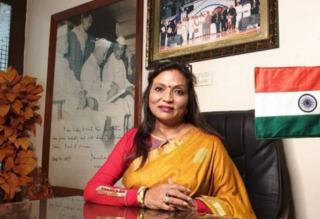
Kalpana Saroj, Chairperson, Kamani Tubes: From Child Marriage to Business Empire
 Industry: Manufacturing Industry
Nationality: Indian
Key Achievement: Kamani Tubes was revived after 17+ years of shutdown, with 140+ legal cases settled
Indian business leader, Kalpana Saroj rose from poverty, child marriage, and discrimination to become a successful entrepreneur. After working in Mumbai’s garment industry, she saved money, built small businesses, and later revived the debt-ridden Kamani Tubes, turning it profitable and earning the Padma Shri award in India today.
Kalpana was born into a Dalit family and witnessed the hardships of poverty and discrimination during childhood.
During the 1970s, when she was only 12 years old, she was married off and shifted to Mumbai to live with her husband’s family, where she endured physical and verbal abuse.
At 16, she began working in the garment industry. She gradually started saving some money, availed herself of loans from the government, and set up small shops for tailoring and furniture.
Kalpana’s entrepreneurial success came after taking control of the failing company Kamani Tubes in 2006. The company at that time had been overwhelmed by debts and lawsuits. It was believed that bringing it back to life was impossible.
However, Kalpana managed to successfully revive the company. She worked with the employees, banks, and government officials to help revive the failing company. The company was successful and profitable. At a later stage, she diversified into various other fields such as real estate and filmmaking. She received the Padma Shri award in 2013, which is one of the highest civilian honours awarded in India.
Lesson To Learn: Resilience Can Transform Even the Most Difficult Circumstances
The life journey of Kalpana Saroj is an inspiring illustration of the power of perseverance and determination. It proves that being an entrepreneur does not necessarily come from the desire to achieve something ambitious; at times, entrepreneurship is forced upon people to restore their self-respect, self-reliance, and dignity.
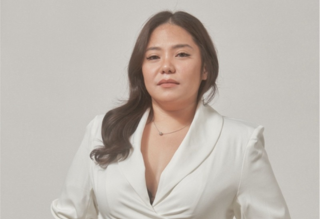
Maria Sucgang, Founder & CEO, Remotify: Building Opportunity Through Remote Work Innovation
 Industry: Outsourcing and Offshoring Consulting
Nationality: Filipino
Key Achievement: Won the Great Place to Work Certification for Remotify from 2022 to 2023
Maria Sucgang, a Filipino entrepreneur, founded Remotify in 2021 after noticing the gap between companies struggling with remote workforce management and skilled Filipino professionals lacking global access.
In her past jobs, Maria discovered that global enterprises were struggling with managing their remote workforce, while many skilled people were unable to obtain global job offers because of coming from countries such as the Philippines.
With growing numbers of companies embracing remote working following the 2020s, Maria recognized the need for solutions that would help them manage their workforces better.
In 2021, Maria established Remotify, a female-led company that simplifies remote workforce management, helping Filipino professionals access global opportunities. She rose to prominence at a time when remote work was revolutionizing the corporate world.
Maria is one of those young female entrepreneurs in Asia who are using technology to not only run startups but also make a difference to the world around them.
Lesson To Learn: Successful Businesses Often Begin by Solving Everyday Problems
The entrepreneurial experience of Maria Sucgang shows the significance of spotting realistic gaps within the industry and coming up with a solution to bridge them. One lesson that one can learn from her story is the fact that innovation does not necessarily mean doing something revolutionary, but rather making things better.
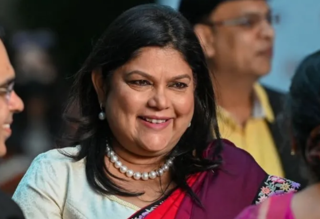
Falguni Nayar, Founder, Nykaa: Proving It Is Never Too Late to Start
 Industry: E-commerce and retail
Nationality: Indian
Key Achievement: In 2020, Nykaa became the first Indian unicorn startup headed by a woman
The founder of Nykaa, Falguni Nayar, a former investment banker, started her company at 49, revolutionizing India’s cosmetics retail market by providing a customer-friendly platform. The successful 2021 initial public offering (IPO) by Nykaa enabled her to become a billionaire.
Falguni is one of the richest Indian entrepreneurs and known for creating a market-defining brand through her experience in corporate investment banking.
Prior to starting her own business, Falguni worked at Kotak Mahindra Bank from 1993 to 2012 in different positions in investment banking. In 2012, at forty-nine years old, she left the corporate world to start a beauty and lifestyle company, Nykaa.
Today, Nykaa is one of the most successful cosmetic brands in India, operating hundreds of retail shops throughout the country. Nykaa’s IPO in 2021 made it one of India’s most notable startups and made Falguni the owner of a billion-dollar brand. After going public, she became one of the wealthiest self-made women billionaires in India.
Lesson To Learn: Experience Can Become a Powerful Entrepreneurial Advantage
Falguni Nayar’s experiences refute the general perception that entrepreneurship is only for the young. The change from a corporation executive to a business owner is an example of how experience in the business world, finance, and customer base can be turned into something useful for business creation.
Lessons on Success from Asian Women Business Leaders
These experiences of successful female Asian entrepreneurs reveal a great deal more than mere business acumen.
Each woman's story tells us of struggles and transformations in her life that are different from those of other women. Some women emerged victorious despite coming from backgrounds of poverty, facing social problems and discrimination.
For some, however, success came at the end of a long road after they had experienced a great deal of disappointment in their lives. Some entered male-dominated industries, while others challenged conventions related to age and background.
But each of them possessed a similar quality; they would not allow difficulties to dictate their choices.
As far as the modern-day business world goes, the message is clear: it is resilience rather than money or contacts that is the most precious thing an entrepreneur can have.
Perhaps that’s the ultimate lesson to be learned from these women.
Latest Issues
🍪 Do you like Cookies?
We use cookies to ensure you get the best experience on our website. Read more...
Copyright © All rights reserved. Global Woman Leader Contact Us About