
.png)
Dealing with the challenges posed by the geo-political turmoil across the Gulf region, uncertainty becomes a constant. It thrusts the responsibility on employers to offer meaningful psychological support continues to grow. Building on the emphasis around human impact, Lim HuiJect, Managing Director Singapore & Middle East, International SOS, notes, ““Employers should also have a robust mental health support structure in place to manage psychological impacts of prolonged conflict.” 
Lim suggests that to ensure resilience, organizations must prioritize verified intelligence, conduct regular reviews of safety protocols, and train their workforce to be familiar with emergency procedures. It is equally crucial for employers to provide strong psychological support to help staff manage the impact of long-term crises.
As global mobility is disrupted and risk intensifies, the Assistance industry is adapting quickly and responsibility to meet rising client and organizational needs. Lim emphasizes that the Gulf region has triggered a sharp rise in calls for assistance. In response, international SOS has facilitated the evacuation of over 1,380 people and managed 4,850+cases as of April 14, providing critical, immediate advice and planning. At the same time, this has required operating at heightened capacity, with Assistance Centres and business units globally stepping in to support colleagues in affected regions and manage spillover demand.
“At the same time, this has required operating at heightened capacity, with Assistance Centres and business units globally stepping in to support colleagues in affected regions and manage spillover demand,” explains Lim.
While businesses face increased uncertainty and challenges owing to the war, yet a major toll of this conflict falls upon regular, everyday lives. Speaking on similar lines, Madalina Cretu, EX- Marketing Director EEIMEA, Alcatel-Lucent Enterprise (UAE), says, “What I notice most is the human side - when schools moved to distance learning, parents needed to split their attention, trying to keep work going while managing home. That changes the rhythm of everything.” 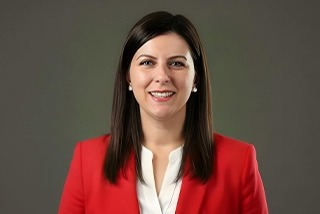
Madalina reiterates that the impact is subtle rather than an obvious one, creating a landscape of slowness and uncertainty where decision-making drags and priorities constantly shift. Most importantly, the human element takes center stage; when schools shifted to distance learning, parents had to split their focus between professional duties and home management, disrupting the natural rhythm of life. This clearly demonstrates that company success is inextricably tied to how employees manage their personal lives.
Madalina goes on to share how she chooses to deal with the challenges that come in the wake of such global turmoil. “I focus on staying close to what’s happening, communicating clearly, and not overcomplicating plans. Flexibility matters more than perfection right now - things change fast, and you have to adapt without overreacting.”
In moments like these where the nation faces heightened uncertainty, she intentionally keeps things simple, without making it complex, often based on clarity and calmness. Her focus stays on being connected to the situation, communicating openly, and not overloading plans. Right now, staying flexible in approach is more valuable than striving for perfection. With every human evolving on a different level based on their life’s circumstances, it is imperative to remember that each one of them carries their own unseen pressures. Offering more insight on this, she remarks that it becomes less about driving intensity and more about being consistent and keeping things moving forward, even if it looks different than before.
Latest Issues
.jpg "Women Healthcare Leaders Philippines")
🍪 Do you like Cookies?
We use cookies to ensure you get the best experience on our website. Read more...
Copyright © All rights reserved. Global Woman Leader