
.png)
Built on algorithms and datasets, Artificial Intelligence has emerged as one of the most disruptive innovations of recent times. However, AI’s intrinsic connection to human capabilities cannot be dismissed.
Translating this into a reality, the future of AI should be built with inputs from diverse voices and perspectives. As a consequence, there is growing discourse advocating for a gender-equitable AI landscape, giving rise of women’s participation in global AI movement.
Women’s Absence in Global AI Ecosystem
Women in AI continue to be a minority globally. Due to AI automation, women remain more vulnerable to layoffs, career interruptions, and job loss, driven by entrenched structural barriers.
According to the International Labour Organization (ILO), women currently occupy only about 22% to 30% of AI-related professional positions globally. WomenTech Network data further shines light on the problem. Women hold only 16% of AI research positions and fewer than 15% of leadership roles in major AI organizations.
Progress toward inclusion remains gradual as women have limited access to AI training and up-skilling opportunities, and continue to face persistent barriers in education, structure and workplace especially in the AI ecosystem. According to WomenTech Network data, 63% of women users reported limited access to proper skills and training, highlighting AI as their highest learning priority.
Africa’s Women Driving Change through AI Startups
Amid global adoption of AI, Africa is accelerating AI adoption as a strategic priority to drive economic growth and overcome infrastructural deficits. However, much like the rest of the world, AI women startup in Africa remains underrepresented as well.
According to the OECD AI Policy Observatory 2024, the role of women contributing to AI science publications in Namibia, Nigeria, and South Africa is merely one-third, whereas men are nearly twice as likely as women to list AI-related skills on LinkedIn.
However, the region is gradually witnessing women pioneering AI adoption, not only by building supportive ventures but by designing solutions to cater to the nation’s most pressing challenges. Across Africa, a growing number of women entrepreneurs are using AI to solve challenges in finance, healthcare, agriculture, climate, and education while reshaping representation in the global tech ecosystem.
Global Woman Leader highlights seven powerful women entrepreneurs in Africa who are using AI to address localized challenges across Africa. From Pezesha founder Hilda Moraa to Lelapa AI founder, Pelonomi Moiloa, read about African women founders, their ventures and how they are solving real world challenges through AI.
Hilda Moraa, Founder & CEO, Pezesha
Industry – Finance & Supply Chain
Nationality – Kenya
Funding - Approximately $11 million in disclosed funding as of May 2026
A veteran entrepreneur, writer, and fintech expert, Hilda Moraa has over 15 years of experience spearheading innovations in the financial and supply chain ecosystem in Africa.
She is currently the founder and CEO of Pezesha, a financial infrastructure tech company committed to providing working capital access solutions and artificial intelligence-enabled credit rating systems.
Founded in 2016, Pezesha raised $11 million in September 2025. Hilda has also been credited to lead Kenya’s very first multi-million-dollar exit. Her startup WezaTele, was acquired for $1.7 million in 2015.
Hilda Moraa's Key Achievements:
Hilda has been recognized by Bloomberg LP as a New Economy Catalyst in 2023 and was named the winner of the Tech & Innovation category at Forbes Woman Africa Awards 2024.By collaborating with financial institutions, telecom companies, and NGOs, Pezesha is scaling its impact while maintaining a diverse team with a respectable female representation.
Kate Kallot, Foudner, Amini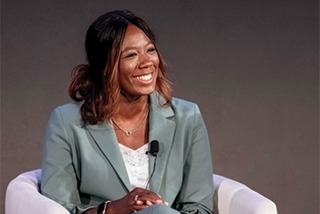
Industry –Data Infrastructure, Climate Tech, Agriculture, Sustainability
Nationality – French-Central African
Funding - Approximately $6M total funding as of May 2026
Kate Kallot is a technologist steering the AI landscape in Africa. Her work focuses on building technologies and solutions that solve the environmental and agricultural data scarcity crisis across Africa and the Global South.
Amini, founded by Kate Kallot in 2022, is a technology company based out of Africa that deals with the development of algorithms for Africa and the rest of the Global South. The company provides environmental intelligence services to farmers, insurance firms, and global supply chain networks through easily accessible APIs, SMS, and USSD services. By using satellite and environmental data, Amini helps its clients make better decisions regarding agriculture and climatic conditions.
Kate Kallot's Key Achievements:
Kate was named among TIME100 AI’s 100 Most Influential People in AI in 2023 and received the TIME100 Impact Award in 2025. She was also recognized as a World Economic Forum Tech Pioneer and awarded the One Young World Entrepreneur of the Year 2024 for her impact-driven work.
Rachel Sibande, Founder, mHub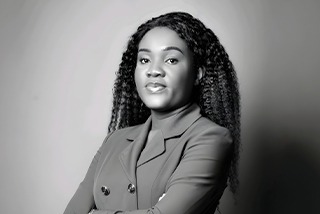
Industry – Technology and Innovation
Nationality – Malawian
Funding – Approximately $5.6 Million in disclosed funding as of May 2026
Computer scientist Rachel Sibande is Africa’s leading data innovation expert with years of extensive leadership driving digital transformation initiative across the nation. She had spearheaded multiple technology-enabled projects across 14 countries and ecosystems.
As founder of mHub, founded in 2013, she established the organization as Malawi’s first innovation hub to support entrepreneurship and technological advancement to enhance digital innovation.Currently serving as Program Director at the Digital Impact Alliance, Rachel is responsible for overseeing big data demonstration model focused on development outcomes in Africa.
Rachel Sibande's Key Achievements:
Rachel has several global recognitions for her innovative contributions: she became a Google Scholar in 2015, participated in the Young African Leaders Initiative, and was twice featured by Forbes among Africa’s emerging entrepreneurs and wealth creators.
Lindiwe Mutungamiri, Founder, Eighty-Nine
Industry – Healthcare
Nationality – Zimbabwean
Lindiwe Mutungamiri, a computer scientist and entrepreneur from Zimbabwe, is at the forefront of healthcare technology innovation within her country. Her work focuses onethical AIdevelopment in healthcare. Recognized as a next-generation leader, she spearheads partnerships, investments, and stakeholder involvement at global platforms.
In 2026, Lindiwe established the health tech start-up, Eighty-Nine, which provides affordable healthcare solutions using artificial intelligence with the objective of bridging the gaps present within Africa. Some key focus areas for Eighty-Nine include data-based diagnostics, healthcare access, and innovative use of technology.
Lindiwe Mutungamiri's Key Achievements:
Owing to her academic and entrepreneurial excellence, Lindiwe has been recipient to multiple honors including the Inspiring Global Citizen Award and induction into the ASU International Students Hall of Fame.Under her leadership, the organization has been able to make important partnerships and receive funding.
Pelonomi Moiloa, Founder, Lelapa AI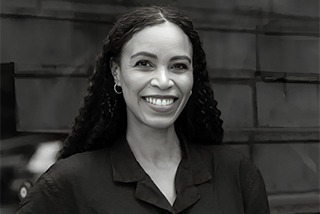
Industry – Natural Language Processing
Nationality – South African
Funding –Approximately $2.5 million in disclosed funding as of May 2026
At the helm of ethical AI is Pelonomi Moiloa, Founder and CEO at Lelapa AI. Her work focuses on developing efficient language technologies specifically designed for the Global South. Pelonomi is best known for constructing an effective and scalable AI infrastructure that can be successfully deployed under conditions of resource scarcity, paying particular attention to ensuring wider digital access in Africa.
Lelapa AI, a Johannesburg-based research and product lab was co-founded by Pelonomi in December 2022. She steers the organization by developing scalable, locally optimized AI solutions designed for constrained environments across the continent. As an advocate for social impact initiatives, she supports work with a girls’ scholarship fund and a community-based nonprofit organizations.
Pelonomi Moiloa's Key Achievements:
Her contributions have garnered her several global recognitions including being named among TIME’s 100 Most Influential People in AI, a Bloomberg Catalyst, a Mozilla Rise 25 Award recipient, and a Forbes Africa 30 Under 50 honoree.
Esther Kimani, Founder, Farmer Lifeline Technologies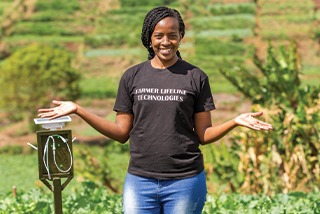
Industry – Agriculture
Nationality – Kenyan
Esther Kimani, a Kenyan computer scientist, launched Farmer Lifeline Technologies to target the agricultural sector by using advanced scanning devices. It leverages innovative solar-powered and AI-based systems to enhance the effectiveness of crop protection among small-scale farmers.
Farmer Lifeline Technologies was founded by Esther in 2019.The organization’s AI devices monitor crops regularly for indications of pests and plant diseases and warn farmers before suffering any losses. The farmers receive timely text messages in their local language providing specific details on the diagnosis and recommended treatments.Tens of thousands of beneficiaries across Kenya have received its benefits while advancing financial inclusion for rural women farmers.
Esther Kimani's Key Achievements:
Esther’s contributions to climate-resilient agriculture have earned international recognition, including the Cisco Youth Leadership Award and the UN FAQ Achievement Scroll. Designed as a cost-effective alternative to laboratory testing and drone surveillance, the solution has contributed to over 30% reduction in crop losses and nearly 40% improvement in yields.
Nadya Yaremenko & Alberta Asafo-Asamoah, Founders, Liquify

Industry – Fintech
Funding - Approximately $1.5million in disclosed funding as of May 2026
Nadya brings more than a decade’s experience in the global trade finance and fintech. Albert Asafo builds the future of AI with a strong background in corporate banking and impact investing. The duo co-founded Ghana-based startup Liquify to bridge the trade finance gap for African SMEs.
Founded in 2023, Liquify connects African small and medium-sized enterprise (SME) exporters with global capital markets. This allows businesses to access immediate cash flow by converting unpaid invoices into working capital. Advancing credit-scoring technology, Liquify is improving financing terms and operational efficiency for businesses.
Liquify digitizes and automates the entire financing process to create opportunities, enable capital access, and support sustainable economic growth globally.
Nadya Yaremenko & Alberta Asafo-Asamoah's Key Achievements:
Nadya & Alberta Asafo have been recognized at several global platforms for making nation’s fintech space opportunistic and sustainable.
The Future of Women-led AI Growth in Africa and Beyond
As Africa heads towards a future powered by artificial intelligence, with an ecosystem that is varied, sustainable, and influential on a global scale, women entrepreneurs are leading the way through innovations that promote inclusion. The approach is part of a larger push for the sustainability of ethical and human-centric artificial intelligence solutions. But in order to fast-track this progress, there is a need to get actionable and responsible support from concerned government bodies, investors, academia, and the private sector.
Expanding access to funding, education, and leadership opportunities will be critical to ensuring this momentum continues across the continent’s evolving AI ecosystem.
Latest Issues
🍪 Do you like Cookies?
We use cookies to ensure you get the best experience on our website. Read more...
Copyright © All rights reserved. Global Woman Leader Contact Us About