
.png)
Amid escalating Middle East conflict and its global economic and energy disruptions, women leaders are redefining business resilience through empathy, adaptability, and strategic foresight. Inna Braverman emphasizes the shift toward decentralized renewable energy as a response to energy insecurity. Lim Hui Ject highlights the growing need for workforce safety and mental health support during prolonged crises. Meanwhile, Madalina Cretu underscores the human impact of conflict on work-life balance and decision-making. Together, these leaders demonstrate how women are steering organizations through uncertainty while prioritizing people, sustainability, and long-term resilience.
War and geopolitical conflict are increasingly reshaping the global economy, triggering an ongoing energy crisis, supply chain disruptions, and widespread socio-economic change. As tensions involving the United States, Israel, and Iran continue to escalate across the Gulf region, their impact extends far beyond the immediate war zone, affecting global energy markets, economic stability, and livelihoods worldwide.
For the Gulf region in particular, these disruptions carry significant consequences, influencing migration patterns, employment, and financial security for millions.
Within this evolving landscape, the role of women’s leadership becomes even more critical, as women leaders navigate uncertainty, drive resilience, and respond to the complex intersection of geopolitics, economic transformation, and social impact. 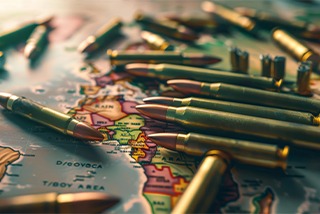
A Brief Timeline of the Middle East Conflict Escalation
With the conflict beginning on February 28, the crisis intensified after US-Israel launched surprise airstrikes on multiple sites and cities across Iran, focusing its military infrastructure and Islamic Republic’s top leadership. What started out as coordinated strikes by the US and Israel against Iran has rapidly evolved into a full-blown conflict in the region, involving interference with energy production sites, counterattacks and threatening key maritime routes.
With parallels drawn from previous events such as attacks on tankers in the Strait of Hormuz, international concern is rising. The aftermath of this ongoing crisis in the Persian Gulf region is now reverberating throughout the globe.The strikes escalated in further disruption of vessel movement through the Strait of Hormuz, affecting global oil supply chains and causing a global energy shock.
The conflict has created widespread fear of regional escalation, threatening oil infrastructure in the region. As the situation continuesto be under world-wide scrutiny, governments of affected nations are identifying routes to migrate the impact with implementation of corrective measures.
Middle East: Workforce Wellbeing as a Business Imperative in Times of Crisis
Behind the headlines rooted in conflict and uncertainty, lays a quieter deeply human story of countless individuals who choose to face each day with resilience. The adverse situation in the Middle East has severely impacted numerous regions, ranging from localized economic disruptions that hinder daily life to operational risks for organizations and widespread interruptions in shipping and trade.
Due to the escalation, the region is witnessing unpredictable turn of events that are beyond any human control. Rather it calls for a re-evaluation of priorities based on contemporary leadership as center stage and gradually taking on new dimensions of empathy and flexibility by re-prioritizing needs.
For many the impact encompasses displacements on an emotional, psychological, and economic front. With no peace agreement in sight, Southeast Asia not only faces rising costs, but also a profound sense of uncertainty that is fundamentally changing the way industries work, adapt and get ready for a world that is becoming more unpredictable.
To survive the aftermath of a war requires a mindset that works with multifaceted approach across all possible domains, focusing on achieving lasting peace, rather than mere cessation of violence.
Latest Issues
🍪 Do you like Cookies?
We use cookies to ensure you get the best experience on our website. Read more...
Copyright © All rights reserved. Global Woman Leader Contact Us About